Critically Thinking About Our 250th Anniversary - 7
Here is an article that I think is demonstrative of our American history…
-————————————————————————————
How American Engineers Unlocked the Impossible Beneath the Gulf of America
July 4th is more than marking America’s independence with patriotic flags, parades, and fireworks. It’s about celebrating American ingenuity, our firm belief that our country can engineer solutions to achieve the impossible, from launching the modern age of aviation to landing a man on the moon.
Some of the most compelling evidence of American exceptionalism today is happening thousands of feet beneath the surface of the Gulf of America, where our offshore industry has spent more than a decade solving one of the hardest engineering problems in the history of energy.
More than 100 miles offshore from the Gulf Coast sits a geological layer of sandstone and shale rock deep beneath the seabed called the Paleogene that holds tens of billions of barrels of oil. For years, most of it was considered unattainable. The reservoir pressures – up to 20,000 pounds per square inch, equivalent to an elephant standing on a quarter – exceeded anything existing technology could handle. No equipment had ever been built to work under those conditions.
The solution was engineered in America
The solution was engineered here, in American waters, by the people who know them best.
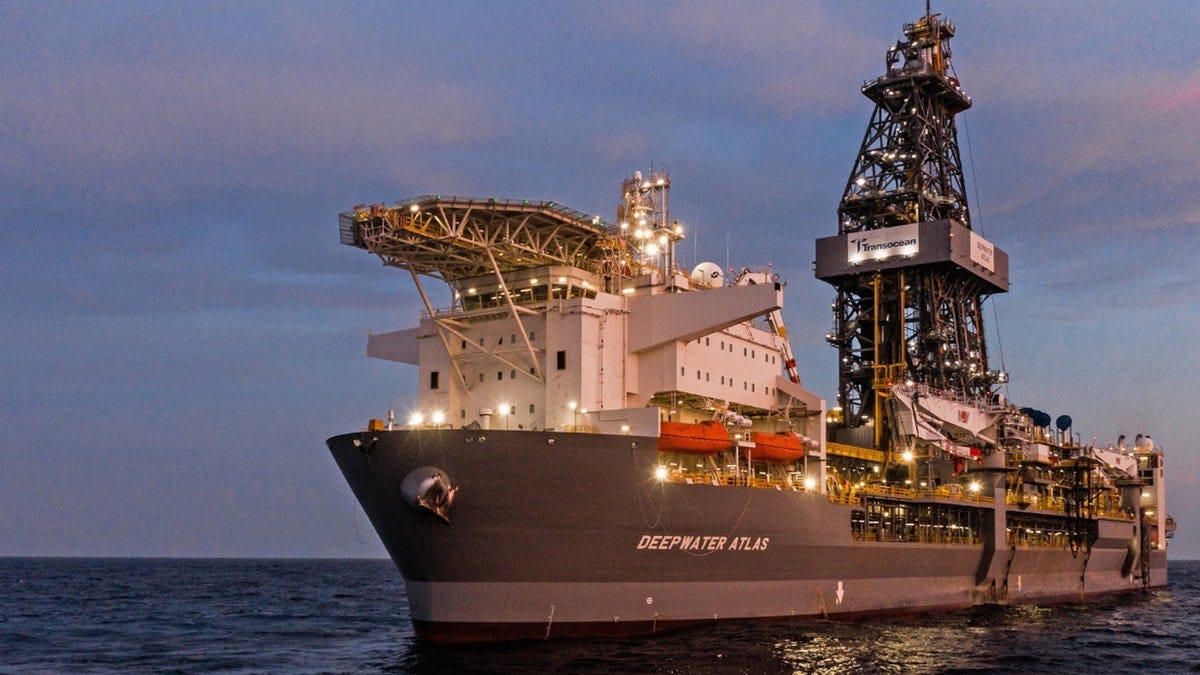
The Deepwater Atlas, owned by Transocean, is a first-of-its-kind drillship. It was deployed at Beacon Offshore’s Shenandoah project, in the Gulf of America. (Beacon Offshore)
Transocean developed the first drillships in the world built to work in these high-pressure conditions. Their Deepwater Titan and Deepwater Atlas are currently operating in the Gulf of America. Trendsetter Engineering designed subsea systems and manifolds capable of operating reliably at pressures once considered beyond reach. Other offshore companies have developed similar equipment that has unlocked the Paleogene.
The results speak for themselves. Chevron’s Anchor project came online in 2024, representing roughly $5.7 billion in development spending. Beacon Offshore’s Shenandoah is also producing oil and natural gas. BP’s development plan for its $5 billion Kaskida project has secured federal approval and is moving toward first production. Together, these projects mark the opening of a new chapter of American offshore capability.
The people who did this work aren’t household names
The people who did this work aren’t household names. They’re engineers and subsea specialists and vessel crews spread across the Gulf Coast, part of a remarkable expertise that shows up when an impossible problem needs solving.
And our people have proven this equipment is safe and reliable.
Safety and containment systems were purpose-built, independently verified, and rigorously tested under federal oversight before a single well was drilled. Offshore consortiums HWCG and Marine Well Containment Co. (MWCC) both maintain 20,000 psi containment systems that can be deployed rapidly in the event of an incident.
Federal regulations require operators to demonstrate access to containment resources, submit detailed response plans, and conduct robust recurring training exercises before drilling begins. The Bureau of Safety and Environmental Enforcement requires third-party certification on every major high-pressure component: blowout preventers, subsea trees, wellheads and completion equipment. Nothing goes offshore without it.
This is an achievement worth celebrating
This achievement that’s producing more American energy is worth celebrating today, especially during a time when we take stock of what this country is built on. The Paleogene wasn’t unlocked by a single mandate or a government program. It was unlocked by an ecosystem of companies, engineers, regulators, suppliers and workers who collectively decided a problem was worth solving and spent years doing it. That’s a distinctly American model, and it works.
The Gulf of America supplies roughly 15% of U.S. oil production. Offshore projects support shipyards, manufacturers, ports, marine operators, and skilled trades across the country. There are jobs and investments in all 50 states.
The Paleogene represents the next chapter of that output, backed by existing infrastructure, an experienced workforce, and decades of hard-won operating knowledge. The economic and national security benefits don’t happen without the long-term investment decisions and the long-term confidence that make them possible.
At 250, America is still a country that does seemingly impossible things. The Paleogene in the Gulf of America is proof.
Erik Milito is president of the National Ocean Industries Association (NOIA), a national trade association representing the full spectrum of offshore energy companies.
Thanks for reading Critically Thinking About Select Societal Issues! Please pass a link to this article on to other associates who might benefit. They can subscribe for FREE to receive new posts (typically about twice a week.
Here is other information from this scientist that you might find interesting:
I urge all readers to subscribe to AlterAI — IMO the absolute best AI option for subjective questions.
I will consider posting reader submissions on Critical Thinking about my topics of interest.
My commentaries are my opinion about the material discussed therein, based on the information I have. If any readers have different information, please share it. If it is credible, I will be glad to reconsider my position.
Check out the Archives of this Critical Thinking substack.
C19Science.info is my one-page website that covers the lack of genuine Science behind our COVID-19 policies.
Election-Integrity.info is my one-page website that lists multiple major reports on the election integrity issue.
WiseEnergy.org is my multi-page website that discusses the Science (or lack thereof) behind our energy options.
Media Balance Newsletter: a free, twice-a-month newsletter that covers what the mainstream media does not do, on issues from climate to COVID, elections to education, renewables to religion, etc. Here are the Newsletter’s 2026 Archives. Please send me an email to get your free copy. When emailing me, please make sure to include your full name and the state where you live. (Of course, you can cancel the Media Balance Newsletter at any time!)
Very interesting and encouraging article. Yes, John, engineers of the likes needed for these kinds of projects probably started being a critical thinker and curious about the world around them as children. Parents need to encourage their children to learn to be problem solvers. Look for your child's natural bent and help them to develop it into a future career. It will benefit them and society. That is, a society of builders, not breakers and givers, not takers.
The American vulnerability is the tendency to eagerly fasten on to the simple "one and done" answer to every situation. The media emphasizes every difficulty as a problem, and every promise as an unmitigated success. Our nation was founded by people who were thoughtful concerning the multitude of definitions of perfection that exist, as well as the disagreements about what might constitute a satisfactory cirvumstance of living. The media encourages an attitude of uncompromising adherence to a single ideal rather than a negotiated, mutually acceptable resolution. We are a resilient, emotionally flexible, and rational people. We need to emphasize those characteristics as we approavh the challenges of the next two-hundred and fifty years (always assuming the Lord Jesus will not return before then). Avoiding absolutism, extremism, and radicalism will give us the best chance of continued prosperity and liberty.